Toyota Levin Hybrid vs Nissan Sylphy e-POWER: Buying Guide
Toyota Levin Hybrid and Nissan Sylphy e-POWER are useful alternatives for buyers who want an electrified family sedan without planning daily plug-in charging. They are not the same type of drivetrain, and neither should be selected from one advertised fuel figure. Match the production period, original market and condition, then test the questions that matter on your normal route.
| Question | Toyota Levin Hybrid | Nissan Sylphy e-POWER |
|---|---|---|
| Identity | Current Levin L or earlier conventional hybrid | Confirmed China-market e-POWER; not petrol-only Sylphy |
| Energy | Petrol and electric hybrid operation | Petrol-powered generation with electric-motor wheel drive |
| Daily task | Same family, route and luggage trial | Same conditions, not a different test cycle |
| Inspection | Vehicle-specific hybrid diagnosis and history | System-specific diagnosis and history |
| Purchase | Support and equivalent delivery costs | Same scope and separately confirmed support |

Compare the correct hybrid sedans
This comparison covers the conventional Levin Hybrid and China-market Sylphy e-POWER, not petrol-only Sylphy, a battery-electric sedan or the older Levin E+ plug-in hybrid. Levin specifications have also changed: the current China manufacturer listing includes Levin L Hybrid, while earlier cars have their own equipment records. Ask for the full factory designation and production date of both candidates. A shared sedan category does not mean the rear seat, transmission or battery specification can be copied between them.
Understand what drives the wheels
Nissan describes e-POWER as electric-motor wheel drive, with the petrol engine generating electrical energy on board. The conventional Toyota hybrid combines engine and electric-motor operation rather than making every journey a plug-in electric trip. Both still need fuel and appropriate engine servicing. A different power path does not prove a universal efficiency winner or guaranteed battery life. Compare the actual drive response and sound under safe, ordinary acceleration; do not treat a technology label as a substitute for a road test.
Related checks: Toyota Levin Hybrid vs Petrol: Is the Premium Worth It?.
Use your commute to assess consumption
Separate short urban journeys from long motorway runs. Record traffic, ambient temperature, passengers and air-conditioning use when comparing observations. Manufacturer test-cycle numbers are a reference, not a promise for every commute, and different years or cycles should not be combined into an artificial ranking. If there are no comparable measurements, use a range of assumptions and mark it clearly as a budgeting exercise. Neither seller should present an unsupported fuel claim as an observed result for the offered vehicle.
Try the family and luggage in both cars
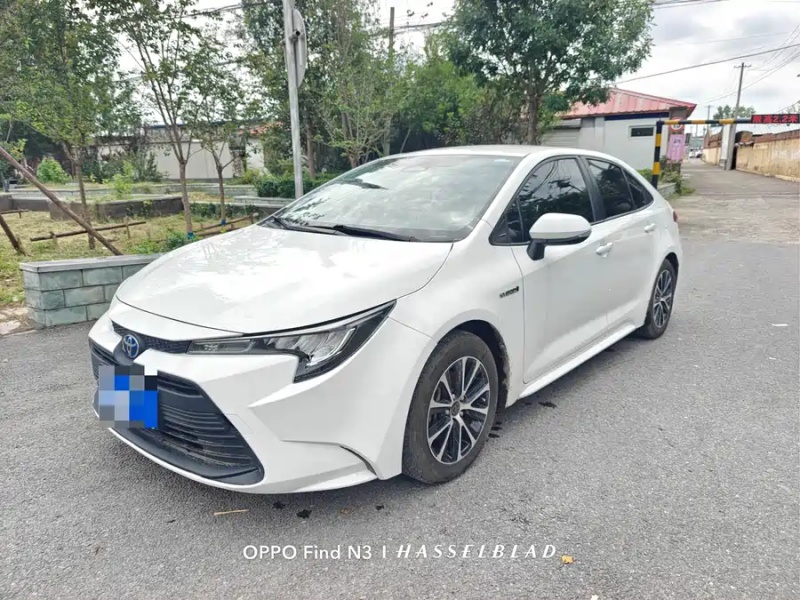
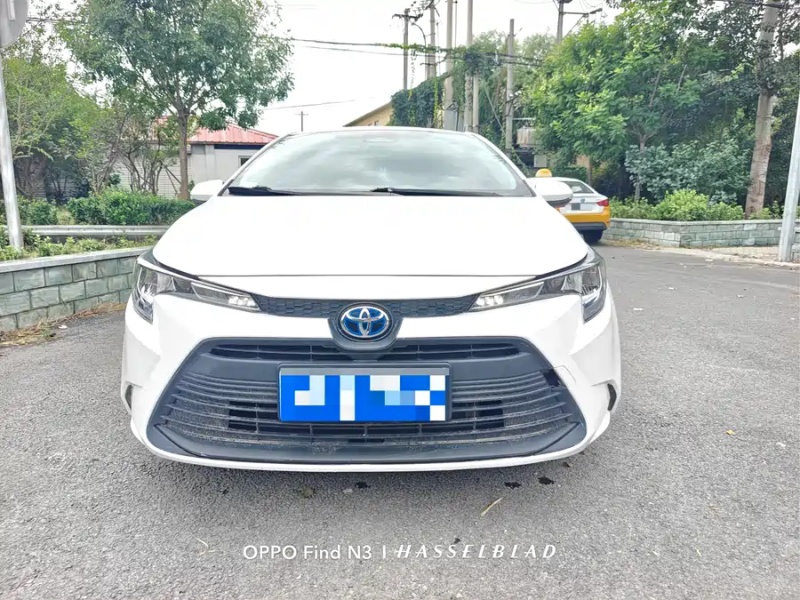
Set the driver seat for the same person, then check the rear passenger position, door access and permitted child-seat installation. Load the same stroller or luggage without sacrificing seats you actually need. The longer current Levin L Hybrid should be tried separately from earlier Levin bodies. Check visibility, parking clearance and the screen functions you use frequently. Photographs of earlier Levin stock on this page illustrate the model family, not the dimensions or cabin equipment of every newer offer.
Inspect the hybrid systems separately
For a used car, ask a qualified workshop for vehicle-specific diagnostic findings, battery information, cooling inspection and an explanation of limitations. A charge-level display is not a health report. For new stored stock, production, storage and pre-delivery preparation remain relevant. Confirm that the destination workshop can identify and support the exact Toyota or Nissan system; one shop saying it services hybrids does not prove access to all required information. Do not attempt high-voltage opening or repair yourself.
Compare the full purchase, not just the fuel bill
Obtain written quotes with equivalent condition, equipment and delivery scope. Add required preparation, destination procedures and a realistic servicing allowance. A lower asking price may conceal different registration status or known repairs. Conventional hybrids do not remove the need for local support, and overseas warranty applicability must be confirmed in writing. Prefer the car that demonstrably fits your passengers and route, has transparent condition and can be maintained where it will operate, rather than declaring one badge best for every buyer.
What to request before ordering
- Full factory version and production period: conventional hybrid on both sides.
- Comparable route observations or explicitly labelled budget assumptions.
- Family, child-seat and luggage trial with the required seats occupied.
- Independent condition reports and a destination service plan for each VIN.
Questions buyers ask
Does Sylphy e-POWER require daily plug-in charging?
The manufacturer describes on-board generation by a petrol engine. It is not the same purchase as a battery-electric car; identify the actual e-POWER version before ordering.
Is Levin E+ included in this comparison?
No. The older E+ plug-in hybrid needs a separate charging and use calculation. Here the Toyota candidate is the conventional Levin Hybrid.
Which one uses less fuel on my motorway commute?
A technology name alone cannot answer that. Compare the correct versions under similar conditions, or use transparent assumptions until suitable observations are available.