Getting the vehicle right is only half the job. Getting it to you — on time, in the condition it left China, at a cost you've properly planned for — is the other half. And that half is where many importers run into expensive surprises.
This guide removes the guesswork. We've written it for importers who want to understand exactly how China car export logistics works for used vehicles — not just a surface-level overview, but the real numbers, the real timelines, the actual cost components, and the genuine challenges you should be prepared for.
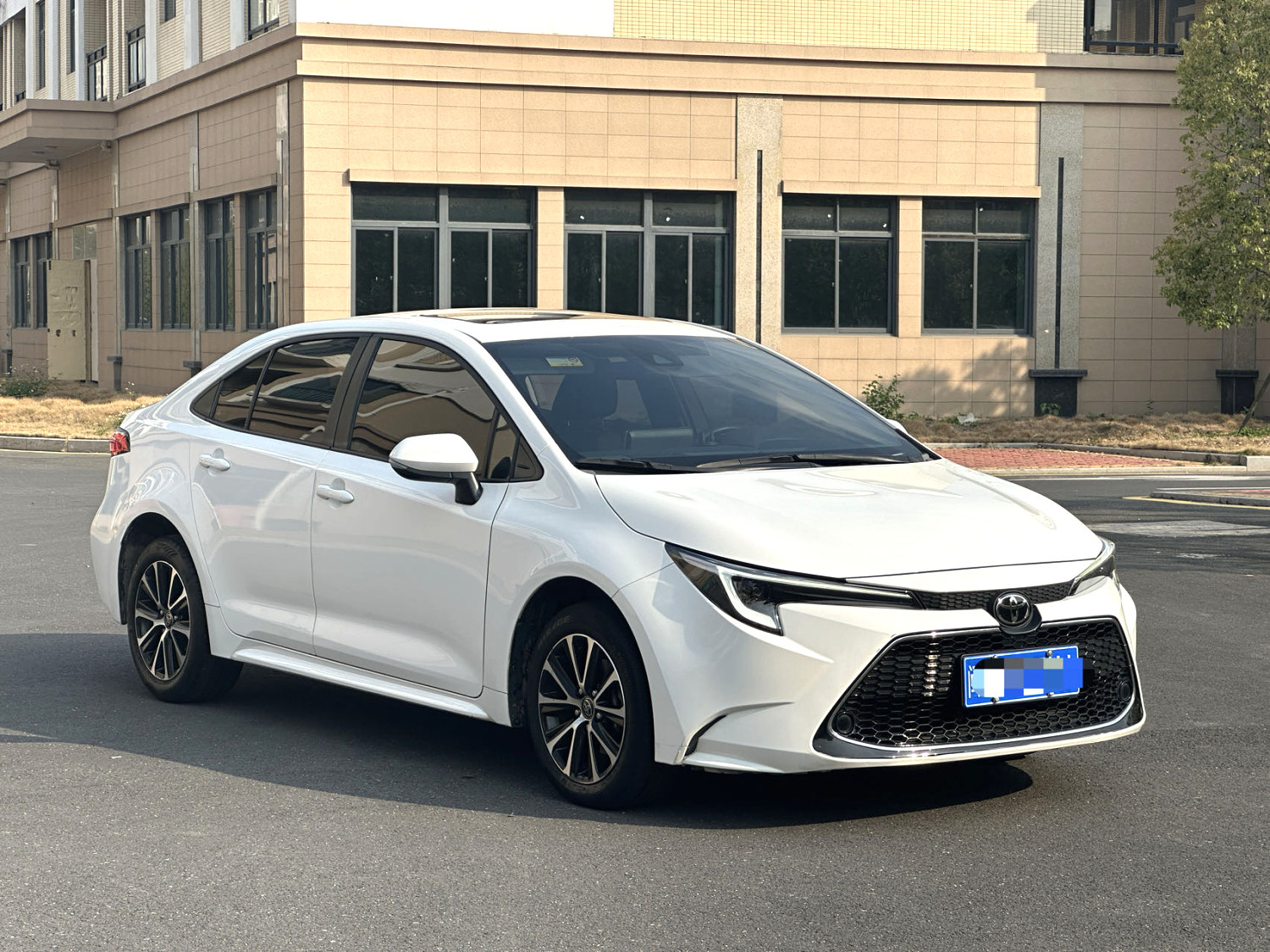
Whether you're shipping a single Toyota Levin as a trial order or planning a multi-unit container shipment, this guide gives you the knowledge to make good decisions, ask the right questions, and protect your investment from the moment the vehicle leaves our facility to the moment it arrives at your destination port.
Ready to see what's currently available to ship? Browse our live Toyota Levin inventory or visit pandausedcars.com to explore our full export catalogue.
Table of Contents
- Overview of Shipping Options: RoRo vs Container
- Detailed Shipping Methods Comparison
- Major Export Ports in China
- Transit Times by Destination Region
- Shipping Costs & How to Calculate Landed Cost
- Insurance & Damage Protection
- Tracking & Communication During Transit
- Common Logistics Challenges & How We Handle Them
- Shipping FAQ
- Start Your Toyota Levin Import Today
Overview of Shipping Options: RoRo vs Container
When it comes to importing Toyota Levin from China, there are two primary ocean freight methods available to you: RoRo (Roll-on, Roll-off) and container shipping. Each has distinct advantages, cost profiles, and practical considerations. Choosing the right method depends on your destination, order volume, vehicle condition, and budget priorities.
Neither option is universally superior. The right choice depends on your specific situation — and our logistics team will always recommend the most appropriate method for your order before you commit to anything.
Here's what you need to understand about each.
Detailed Shipping Methods Comparison
RoRo (Roll-on, Roll-off)
RoRo shipping is the automotive industry's default method globally. Vehicles are driven directly onto the vessel via a ramp, secured on board, and driven off at the destination port. There are no containers involved — the vehicle simply rides on the ship as cargo.
Advantages of RoRo:
- Lower freight cost per vehicle compared to container shipping
- Widely available from all major Chinese ports to most global destinations
- Simpler loading and unloading process — no crane, no stuffing/stripping costs
- Frequent sailing schedules on high-demand routes
- Efficient for single units or small batches without needing to fill a container
Disadvantages of RoRo:
- Vehicles are exposed to sea air and weather during transit (though secured in the vessel hold)
- Less physical protection than an enclosed container
- Some destination ports have limited or no RoRo facilities — container is the only option in those cases
- Slightly higher risk of minor cosmetic damage during the drive-on/drive-off process
- Less flexibility for non-standard or non-running vehicles
Container Shipping
Container shipping places your Toyota Levin inside a standard steel shipping container — typically a 20-foot (1 vehicle) or 40-foot (2–4 vehicles) container — which is then loaded onto a container vessel.
Advantages of container shipping:
- Maximum physical protection — vehicle is fully enclosed throughout transit
- Works for any destination port with container handling capability (virtually universal)
- Better for high-condition vehicles where cosmetic protection is a priority
- Allows mixed shipments — multiple vehicle models or additional cargo in one container
- Works for non-running vehicles without special arrangements
- Container can be sealed with the vehicle inside, offering an additional security layer
Disadvantages of container shipping:
- Higher cost per vehicle, especially for single units (cost is shared when filling the container)
- Loading (stuffing) and unloading (stripping) the container adds handling steps and cost
- Slightly more complex documentation and port procedures in some markets
Head-to-Head Comparison Table
| Factor | RoRo | Container |
|---|---|---|
| Cost (single unit) | Lower | Higher |
| Cost (4+ units) | Competitive | Often more cost-effective per unit |
| Physical protection | Good | Excellent |
| Port availability | Major ports | Near-universal |
| Non-running vehicles | Not suitable | Fully suitable |
| Sailing frequency | High on major routes | Very high on all routes |
| Documentation complexity | Moderate | Moderate to high |
| Ideal for | Single units, cost-sensitive | High-value, mixed loads, protected routes |
Our recommendation: For most standard Toyota Levin imports to established routes (Africa, Middle East, Southeast Asia), RoRo is cost-effective and reliable. For first-time importers prioritising peace of mind, or for clients importing into ports with limited RoRo access, container shipping is the right choice. Our team will give you a specific recommendation based on your destination and order profile.
Major Export Ports in China
China has several ports capable of handling used vehicle exports. The port used for your shipment will depend on where the vehicle is sourced and which offers the best sailing options to your destination.
Key Ports We Work With
Tianjin Port — Located in northern China, Tianjin is one of the highest-volume automotive export ports in the country. It offers excellent RoRo and container services to the Middle East, Africa, and Southeast Asia. Most vehicles sourced from Beijing and northern China regions move through Tianjin.
Shanghai Port — The world's busiest container port and a major RoRo hub. Shanghai offers the widest range of destination services and the most frequent sailing schedules globally. Strong connections to Southeast Asia, Australia, and transhipment hubs.
Guangzhou / Nansha Port — Southern China's key automotive export hub. Well-positioned for Southeast Asian routes and increasingly used for African and Middle Eastern destinations.
Qingdao Port — A significant northern port offering both container and RoRo services, with strong routes to the Middle East and Africa.
Shenzhen / Yantian Port — High-volume southern container port with global coverage. Used primarily for container shipments.
For most Toyota Levin export orders, **Tianjin** and **Shanghai** are the primary departure points, depending on vehicle location and destination requirements. Our logistics team confirms the optimal port for each order at the time of booking.
Transit Times by Destination Region
Transit times begin from vessel departure at the Chinese port. They do not include pre-shipment processing time (typically 15–25 days from order confirmation) or destination port clearance time. Plan your total timeline accordingly.
Ocean Transit Time by Region
| Destination Region | Approximate Transit Time | Primary Chinese Port |
|---|---|---|
| Southeast Asia (Thailand, Vietnam, Philippines, Indonesia) | 5–15 days | Shanghai, Guangzhou |
| South Asia (Sri Lanka, Bangladesh, Pakistan) | 10–20 days | Tianjin, Shanghai |
| Middle East (UAE, Qatar, Saudi Arabia, Oman) | 15–25 days | Tianjin, Shanghai |
| East Africa (Kenya, Tanzania, Mozambique, Ethiopia) | 20–30 days | Tianjin, Shanghai |
| West Africa (Nigeria, Ghana, Ivory Coast, Senegal) | 28–40 days | Shanghai |
| South Africa | 22–32 days | Shanghai, Tianjin |
| Latin America (Chile, Peru, Mexico, Colombia) | 30–45 days | Shanghai |
| Caribbean | 35–45 days | Shanghai |
| Europe | 25–35 days | Shanghai |
Total Timeline Planning
A realistic total timeline from order confirmation to vehicle available at destination port:
- Pre-shipment processing: 15–25 days (inspection, documentation, booking, port delivery)
- Ocean transit: As per table above
- Destination port clearance: 3–15 days depending on port efficiency and your local agent
Practical planning example: An East Africa import should be planned over 60–80 days total from order confirmation to cleared vehicle available for collection. Plan your stock cycles accordingly.
Shipping Costs & How to Calculate Landed Cost
Understanding the full cost — your **landed cost** — is essential before committing to any import. The vehicle purchase price is just one component. Here is every cost element you need to budget for.
Cost Components for Importing Toyota Levin from China
1. Vehicle Purchase Price
The ex-China price of the Toyota Levin, as quoted by Panda Used Cars.
2. Domestic Chinese Logistics
Transport of the vehicle from its sourcing location to the export port. This varies by distance — typically USD 100–400 per vehicle.
3. Export Handling & Documentation Fees
Port handling, export customs declaration, documentation preparation. Typically USD 150–350 per vehicle.
4. Ocean Freight
The largest variable cost after the vehicle itself. Varies significantly by:
- Shipping method (RoRo vs container)
- Destination port
- Current market freight rates
- Volume (FCL vs LCL for containers)
Indicative ranges (USD per vehicle, subject to market fluctuation):
- Southeast Asia: USD 300–700
- Middle East: USD 500–900
- East Africa: USD 700–1,200
- West Africa: USD 900–1,500
- Latin America: USD 1,200–2,000
5. Marine Insurance
Typically 0.5%–1.5% of the vehicle's declared value per shipment.
6. Destination Port Charges
Unloading, port storage, terminal handling — varies by destination country. Budget USD 100–500.
7. Import Duties & Taxes
This is the most variable element and is entirely determined by your destination country's tariff schedule. Duties may be calculated on CIF value (Cost + Insurance + Freight) and can range from 0% to 100%+ depending on your market. Consult your local customs agent for the current applicable rate.
8. Local Customs Clearance
Your local agent's fee for processing the import customs entry. Budget USD 200–600 depending on market.
9. Local Delivery
Transport from destination port to your premises.
Landed Cost Calculation Example
| Cost Element | Example Amount (USD) |
|---|---|
| Vehicle purchase price | 12,000 |
| Domestic China logistics | 250 |
| Export handling & docs | 280 |
| Ocean freight (RoRo, East Africa) | 950 |
| Marine insurance | 130 |
| Destination port charges | 300 |
| Import duty (example: 25% CIF) | 3,390 |
| Local customs clearance | 400 |
| Local delivery | 150 |
| Total Landed Cost | ~17,850 |
This is an illustrative example only. Your actual costs will vary based on specific vehicle value, destination country duties, current freight rates, and local agent charges. Always calculate your landed cost before confirming an order — and factor in your target retail margin from there.
Insurance & Damage Protection
Every Toyota Levin exported through Panda Used Cars is covered by **marine cargo insurance** throughout the ocean transit. This is non-negotiable — we do not ship uninsured vehicles.
What Marine Cargo Insurance Covers
- Physical damage to the vehicle caused during loading, transit, or unloading
- Total loss in the event of vessel casualty
- Water damage from weather or sea conditions
- Fire and collision damage during transit
What It Typically Does Not Cover
- Mechanical or electrical failure unrelated to a transit incident
- Pre-existing condition issues not caused during shipping
- Delays caused by port congestion, weather, or customs holds
Your Role in Protecting Your Shipment
At the destination port, always:
- Conduct a thorough visual inspection of the vehicle before accepting delivery from the port
- Compare the vehicle's condition against the pre-shipment inspection report and photographs provided by us
- Document any discrepancies with photographs immediately
- Note any damage on the delivery receipt — do not sign a clean receipt if damage is visible
- Contact your Panda Used Cars account manager immediately if any transit damage is identified
Prompt documentation at the point of receipt is essential for any insurance claim to proceed successfully. Our team will support you through the claims process if it becomes necessary.
Tracking & Communication During Transit
We believe that a silent exporter is an anxious importer. Our communication process is designed to keep you informed at every stage without you having to chase us for updates.
Standard Milestone Updates We Provide
| Milestone | Notification Method |
|---|---|
| Vehicle inspection complete | Report + photos sent via email/WhatsApp |
| Export booking confirmed | Booking confirmation + estimated departure date |
| Vehicle delivered to port | Port receipt confirmation |
| Vessel loaded and departed | Bill of Lading issued + vessel name + voyage number |
| In-transit update (long voyages) | Mid-voyage status update |
| Estimated arrival confirmation | ETA notification 5–7 days before arrival |
Vessel Tracking
Upon vessel departure, we provide you with:
- Vessel name and IMO number
- Voyage number
- Bill of Lading number
- Departure port and date
- Destination port and ETA
You can track the vessel independently in real time using platforms such as **MarineTraffic** or **VesselFinder** using the vessel name or IMO number provided. You don't need to rely solely on our updates — we give you the tools to verify directly.
Communication Channels
Our team is available via **WhatsApp**, **email**, and **video call** throughout the shipping process. Your dedicated account manager is your single point of contact for all shipping-related questions and updates.
Common Logistics Challenges & How We Handle Them
No logistics operation is entirely free of challenges. Honesty about what can go wrong — and how we handle it — is more valuable to you than a promise that everything always goes perfectly.
Port Congestion Delays
The challenge: Chinese ports, like ports globally, can experience congestion that delays vessel departures or prolongs port dwell time.
How we handle it: We maintain active relationships with multiple freight forwarders and have flexibility to route shipments through alternative ports when primary port congestion is severe. We notify clients of any delay as soon as it is identified and provide revised ETAs.
Documentation Discrepancies
The challenge: A mismatch between documents — such as a name spelling discrepancy or a VIN transcription error — can cause customs delays at the destination.
How we handle it: Our documentation team conducts a final cross-check of all export documents against each other before shipment. We request that clients verify all details on the commercial invoice before confirmation to catch any errors early.
Vessel Schedule Changes
The challenge: Shipping lines occasionally change vessel schedules, resulting in delays or cargo rollovers to a later vessel.
How we handle it: We work with multiple carrier relationships and monitor bookings actively. If a vessel schedule changes, we immediately notify the client and work to secure space on the next available sailing.
Destination Port Delays
The challenge: Some destination ports — particularly in West Africa — are known for extended customs clearance periods and port congestion.
How we handle it: We advise clients on realistic clearance timelines for their specific destination and recommend experienced local clearing agents where we have established relationships. We also ensure all documentation is complete and correct before shipment to minimise customs queries.
Vehicle Condition Discrepancy on Arrival
The challenge: In rare cases, a vehicle may arrive with minor damage or condition variation from the documented pre-shipment report.
How we handle it: Our pre-shipment inspection documentation — photographs, video, written report — serves as the definitive reference point. If damage occurred during transit, the marine insurance claim process is initiated. If there is a genuine discrepancy between documented and actual condition, we investigate and work toward resolution. See our FAQ page for our full claims handling process.
Shipping FAQ
Q: Can you ship to any port in the world?
We ship to the vast majority of commercial ports globally. Some very remote or conflict-affected destinations may have limited or no direct service, and some ports have restrictions on used vehicle imports. Contact us with your specific destination and we'll confirm availability.
Q: How many Toyota Levin units fit in a 40-foot container?
A standard 40-foot high-cube container typically accommodates 2–3 Toyota Levin sedans loaded at ground level. With professional ro-ro loading platforms (racking systems), 4 units can be loaded. The exact number depends on the loading configuration, container type, and vehicle specification. Our logistics team confirms container capacity at the planning stage.
Q: Do I need to arrange my own shipping, or do you handle it?
We handle the complete export-side logistics — domestic transport, port delivery, export customs declaration, freight booking, insurance, and Bill of Lading issuance. Destination-side logistics — import customs clearance and local delivery — are typically handled by your local agent. We can recommend clearing agents in many markets.
Q: What documents do I need to provide on my end to clear the vehicle through customs?
Requirements vary by country. Typically your customs agent will need: the Bill of Lading, commercial invoice, packing list, certificate of origin (where applicable), and the original Chinese vehicle title. We provide all of these. Your local customs agent will advise on any additional country-specific requirements. Our export process guide covers documentation in full.
Q: Can I request a specific vessel or shipping line?
You can express a preference, and we will accommodate it if space is available with that carrier on your required route. In practice, our freight forwarder relationships give us access to the most competitive rates and reliable schedules — we'll always recommend the best available option for your route.
Q: What happens if my vehicle misses its scheduled vessel?
If a vehicle misses a scheduled vessel — due to port delays, documentation issues, or any other reason — we immediately book the next available sailing and notify you with the revised schedule and new ETA. Our team actively monitors booking status to minimise the risk of cargo rollovers.
Q: Is RoRo shipping safe for a high-condition Toyota Levin?
Yes. RoRo is the standard method used by major automotive manufacturers for new vehicle exports globally, and it is equally safe for quality used vehicles. Our pre-shipment inspection documentation provides a baseline record of condition, and marine insurance covers any transit damage. For clients with additional concerns, container shipping provides maximum physical protection.
Q: How far in advance should I plan my import to meet a specific arrival deadline?
Work backwards from your required availability date at destination. Add: destination port clearance time + ocean transit time + pre-shipment processing time (15–25 days). For most African and Middle Eastern destinations, plan 60–90 days from order confirmation. For Southeast Asian destinations, 35–50 days is typically sufficient. Contact us as early as possible — late planning is the most common cause of missed timelines.
Start Your Toyota Levin Import Today
You now have a complete picture of how **Toyota Levin shipping from China** works — from choosing the right shipping method to understanding every cost component, tracking your shipment in real time, and handling the challenges that occasionally arise. Logistics knowledge is commercial power. The importers who plan carefully, understand their landed costs, and work with experienced logistics partners are the ones who build profitable, scalable import businesses.
We've handled Toyota Levin export logistics to markets across six continents. We know what works, what to watch for, and how to keep your shipment moving. Let us put that experience to work for you.